The Town That  Named Itself After a  Fish

We’re spending the week in Port Aransas, so naturally I went digging into its history. And friends, this little beach town has had more names than a stray dog.

Long before any of us, the Karankawa Indians lived on these islands. Then in 1519 a Spanish explorer sailed through the pass, and local legend says the pirate Jean Lafitte hung around here in the early 1800s — supposedly he buried treasure on Mustang Island. If anybody finds it, I get ten percent for the tip.

When settlers finally built a town here, they couldn’t settle on what to call it. In 1888 a businessman named Elihu Ropes bought the entire island for $25,000, so naturally the town became Ropesville. Then in 1896 the whole town — all 250 folks — decided they’d rather be named after the giant silver tarpon filling their waters. So it became Tarpon, Texas. It finally landed on Port Aransas in 1912.

A town that renames itself after a fish is my kind of town.

The Tarpon Inn has been here since 1886 — it started life as an old barracks, and the lobby walls are papered with more than 7,000 signed tarpon scales. Catch a tarpon, sign your scale, stick it on the wall. They’ve been doing it for over a hundred years.

And here’s my favorite part: in May of 1937, President Franklin D. Roosevelt himself came down to fish these waters. He landed a five-foot tarpon, the photographs went out across the whole country, and just like that, a 250-person fishing village was famous. His signed scale is still hanging at the Tarpon Inn.

It hasn’t been easy living. The 1919 hurricane leveled the town, and Harvey came straight at it in 2017. But Port Aransas does what Texas towns do — it rebuilds, reopens the bait shops, and gets back to fishing.

I’ll be reporting from the beach all week. If I catch anything bigger than a sunburn, you’ll read about it here. — Dinky

The Body of Christ by the Bay

We’re headed to the coast this week, so I did what I do — I went and read up on where we’re going. And Corpus Christi, friends, has a story.

Start with the name. Corpus Christi is Latin for “Body of Christ.” Way back in 1519 — before the Pilgrims, before Jamestown, before just about everything — a Spanish explorer named Alonso Álvarez de Pineda sailed into the bay on the Catholic feast day of Corpus Christi. He named the whole sparkling bay for the holy day. Five hundred years later, we’re still saying it.

The town itself got going in 1839, when a fellow named Colonel Henry Lawrence Kinney set up a trading post on the shore. It was incorporated in 1852, and it wasn’t long before history came knocking hard.

During the Civil War, Union warships shelled the town in August of 1862 — the Battle of Corpus Christi, fought right there in the bay. Then in 1919, a hurricane nearly erased the whole city. Hundreds of people died, downtown was flattened, and the great seawall you see today was built so it could never happen quite that way again.

But Corpus Christi rebuilt, like Texas towns do. The port opened in 1926 and grew into one of the biggest in the entire country. And the city gave the world Selena — the queen of Tejano music called Corpus Christi home, and her memorial statue, the Mirador de la Flor, still looks out over the water she sang about.

So that’s where we’re headed: a city named for a feast day, shelled in a war, flattened by a storm, and still standing there shining on the bay. I’ll report back on what we find — and what we eat. You know I will.

Bloom where you are planted. — Dinky

Three Jobs and Ten Kids

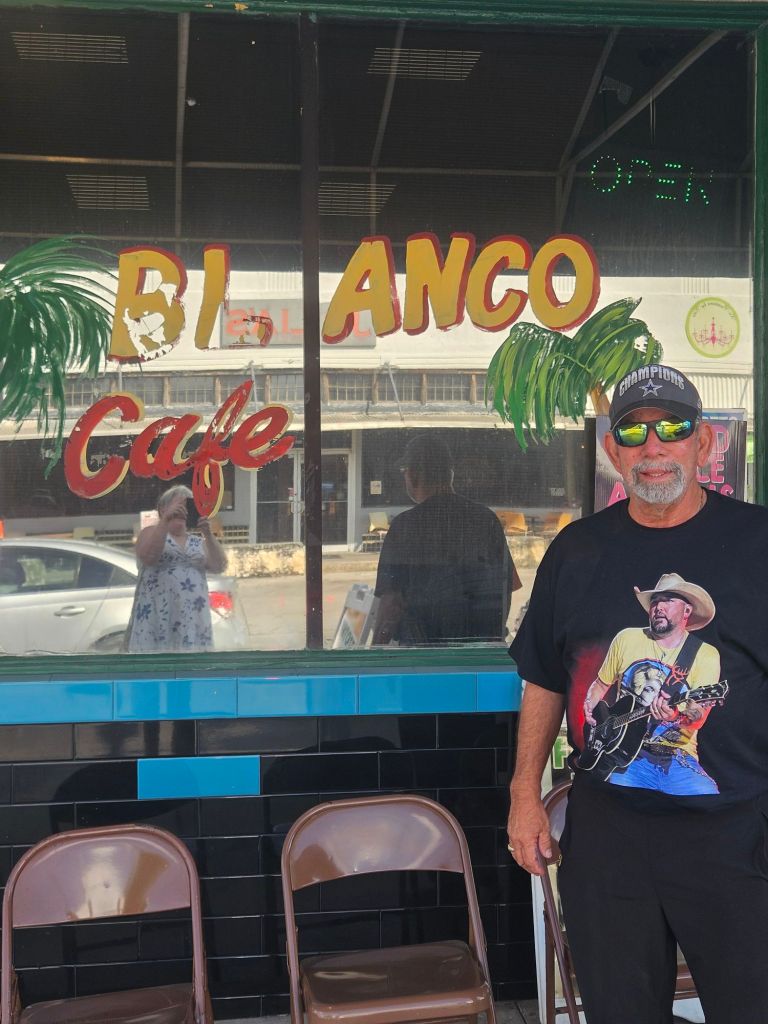
Blanco Cafe

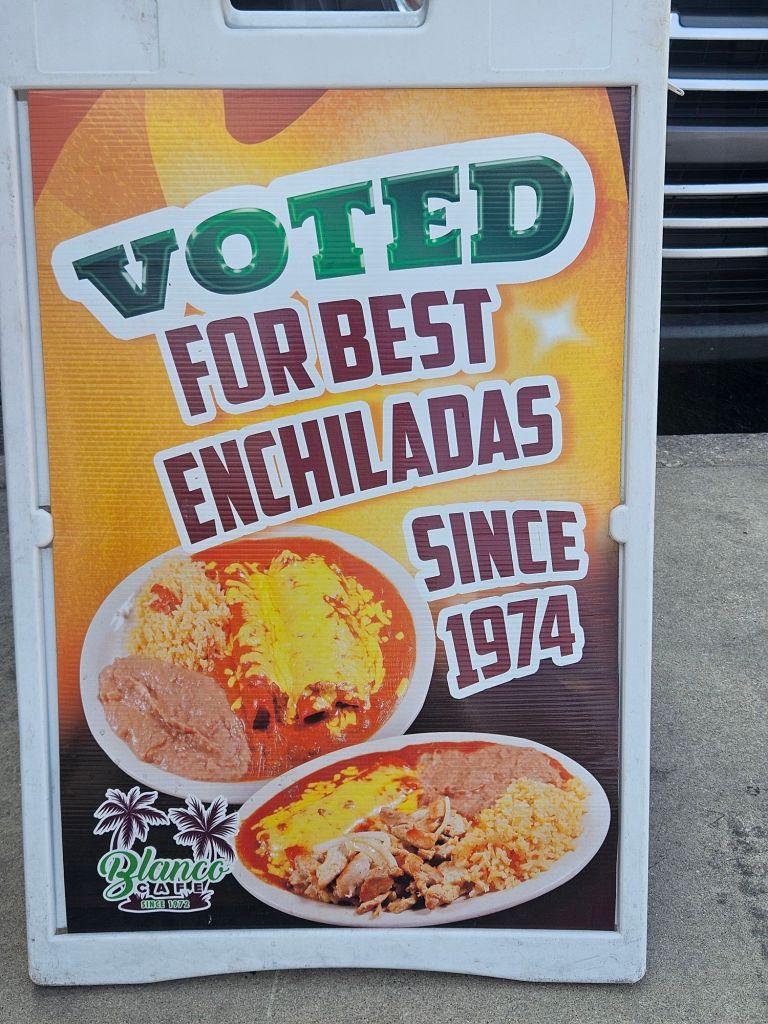
Papi, our son Petie, and I had lunch today at Blanco Cafe in San Antonio — and I can’t stop thinking about the man who started it.

His name was Alejandro F. San Miguel. In September of 1974, he opened a little restaurant at 1720 Blanco Road. And here’s the part that stopped me cold: at the time, he was working three jobs. He delivered newspapers before the sun came up, worked at the Labatt brewery during the day, and clerked at the Guadalupana Pharmacy at night.

Why? To give a little more to his wife Elida and their ten children. Ten. I raised my eyebrows so high they nearly left my forehead.

And he didn’t quit those jobs the day the restaurant opened, either. He kept that grueling schedule for a whole year — running the cafe on top of everything else — because that’s what it took.

Sitting there with my boys, eating enchiladas at a place that’s now a San Antonio institution — voted best enchiladas in town, fifty-plus years later — I kept thinking about Mr. San Miguel rolling out of bed at 3 a.m. to throw newspapers. Every plate that comes out of that kitchen is standing on his shoulders.

The enchiladas lived up to the reputation, by the way. Petie cleaned his plate, Papi ordered like a man with no regrets, and I sat there doing the thing I do — watching my family laugh across a table and feeling rich in the way that actually counts.

Bloom where you are planted. Mr. San Miguel planted himself on Blanco Road in 1974 and grew something that’s still feeding families today. — Dinky

Sixty Years of Sweet Bread


I followed my nose this morning, and it led me to La Popular Bakery in San Antonio.

You know how some places you can smell before you see? That’s this one. The minute that door opened, it was warm sugar and cinnamon and fresh-baked everything, and I just stood there a second like a woman who’d walked into a hug.

The cases run the length of the shop — conchas in every color, campechanas, cinnamon rolls, cookies by the tray. Pan dulce, the real thing, baked fresh daily the way it’s been done here since 1966.

That’s the part that got me. La Popular was started in 1966 by Pablo and Blanca Garza, and sixty years later it’s still their family behind the counter — the Cerna-Garza family, generation after generation, pulling the same sweet bread out of the same ovens. In a world where everything changes every five minutes, there’s a family in San Antonio that just kept baking.

I got a bag of cream puffs and some cookies, because I have the willpower of a screen door in a windstorm. Papi claimed two before we made it back to the car. The flour tortillas are homemade too, and let me tell you, store-bought tortillas should be embarrassed.

If you’re ever in San Antonio, go early — the locals know, and the good stuff goes. Find them on West Ave or Cupples Road, and tell them Dinky sent you. They won’t know who that is, but it’ll make you feel like a regular.

Bloom where you are planted — and this morning, I was planted in front of a bakery case with powdered sugar on my shirt. — Dinky

Vacation

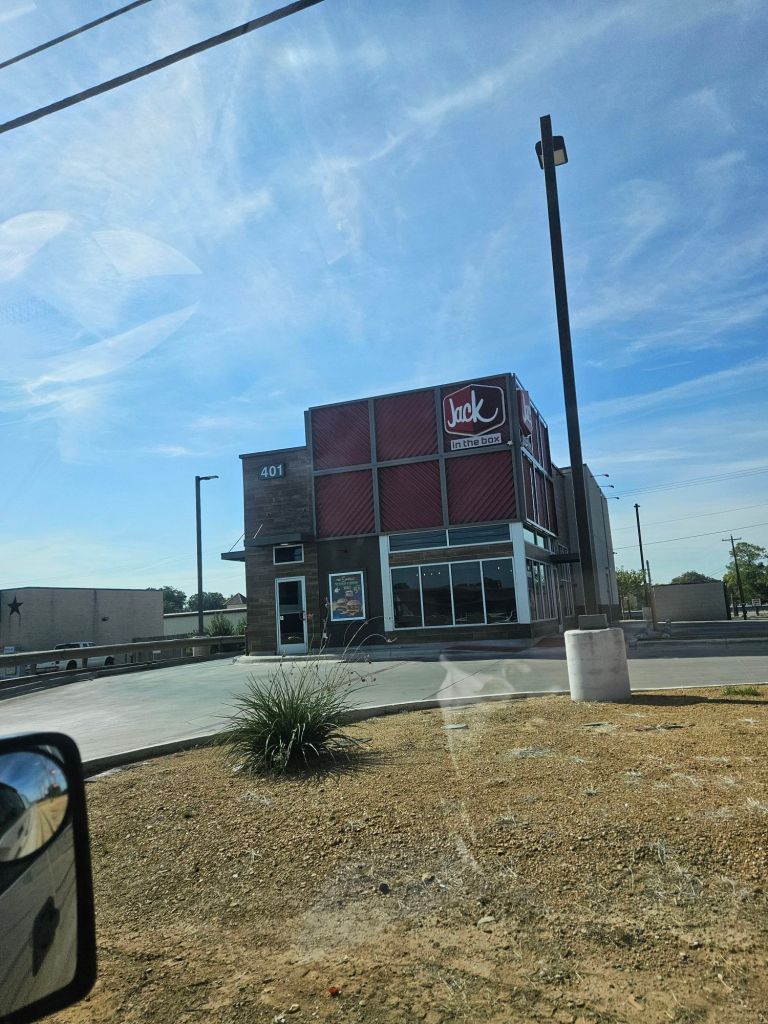
Jack In The Box
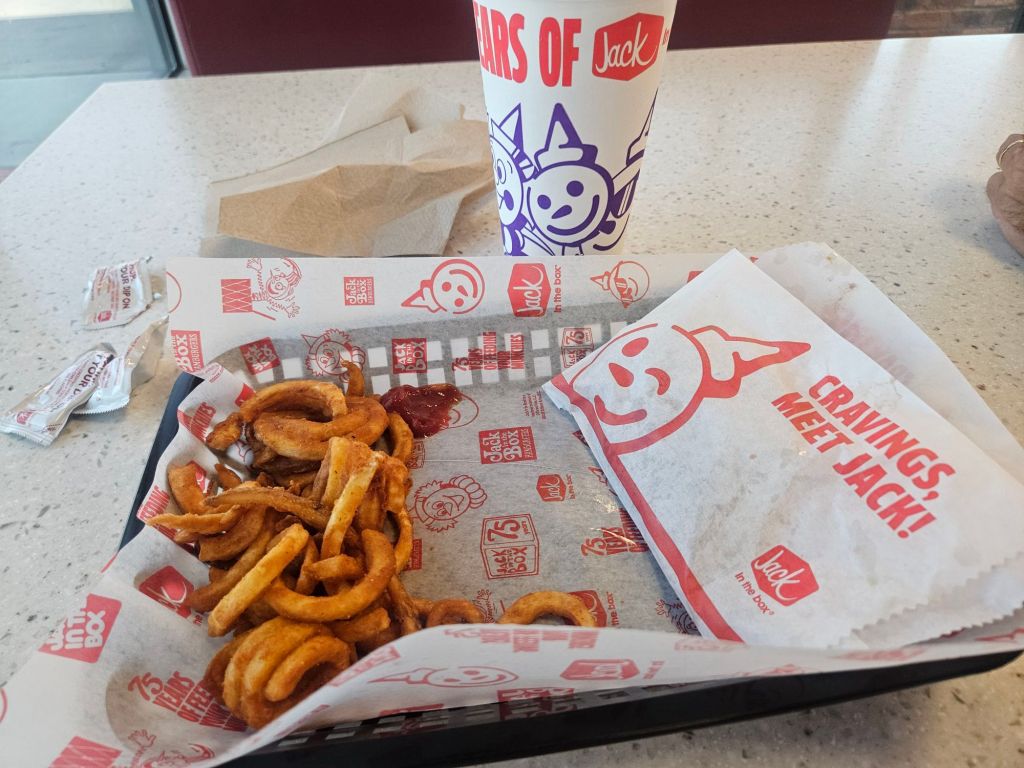
Taco combo

We were a little late getting started on our vacation today so we missed breakfast. Jack in the Box is known for curly fries and tacos. Pretty good stuff.

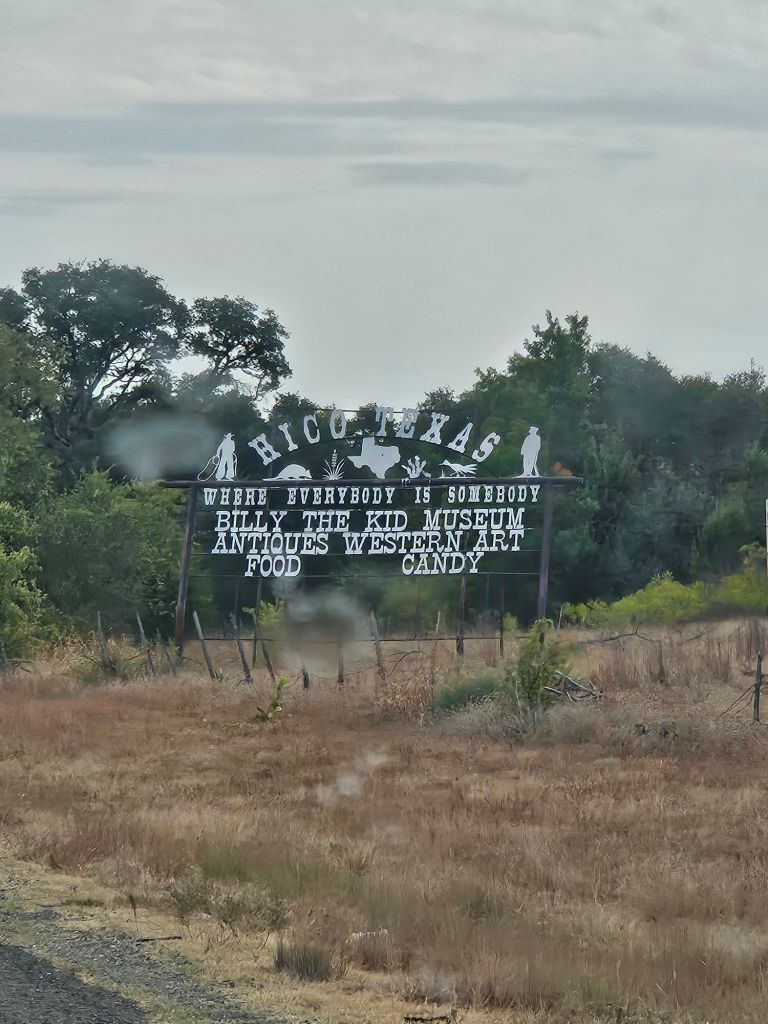
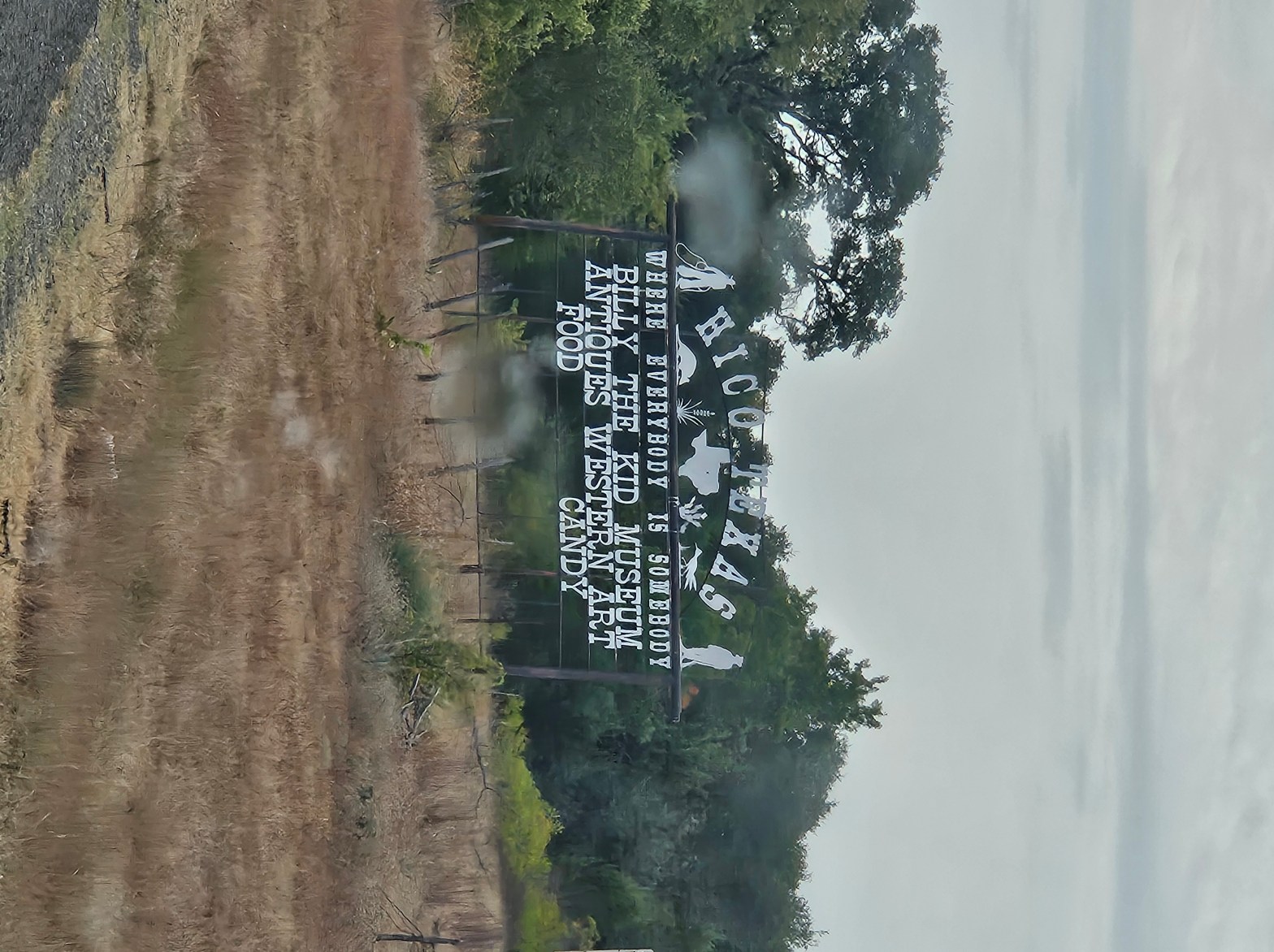
Hico Texas

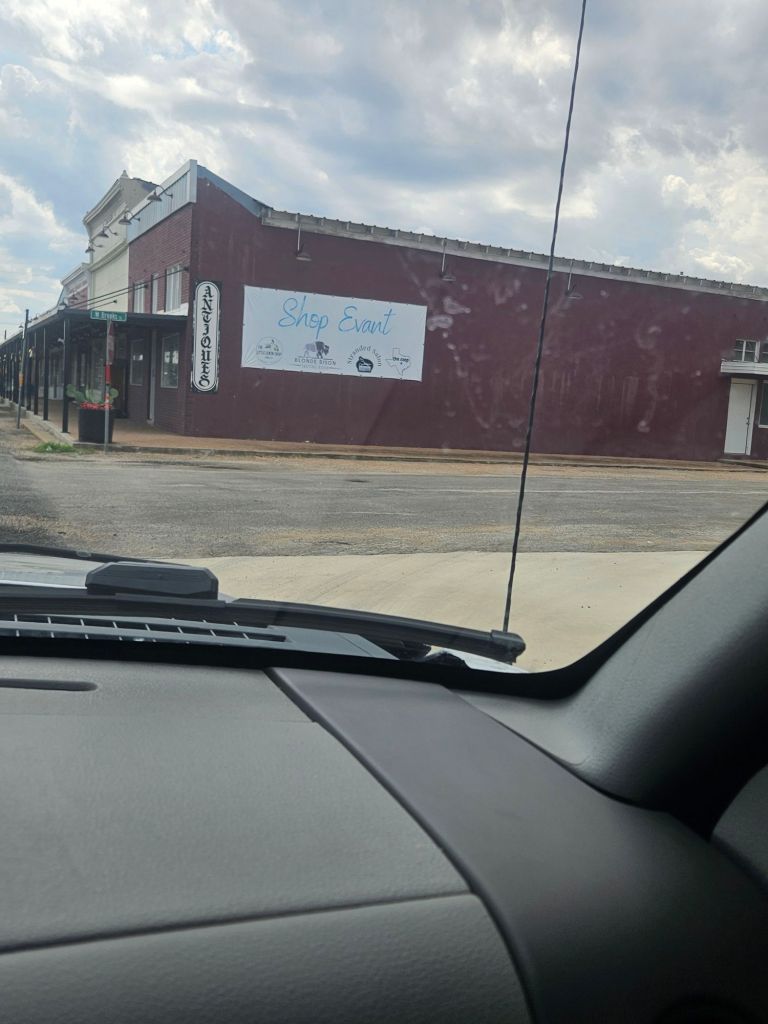
Lots of history in Hico Texas.

Snacks

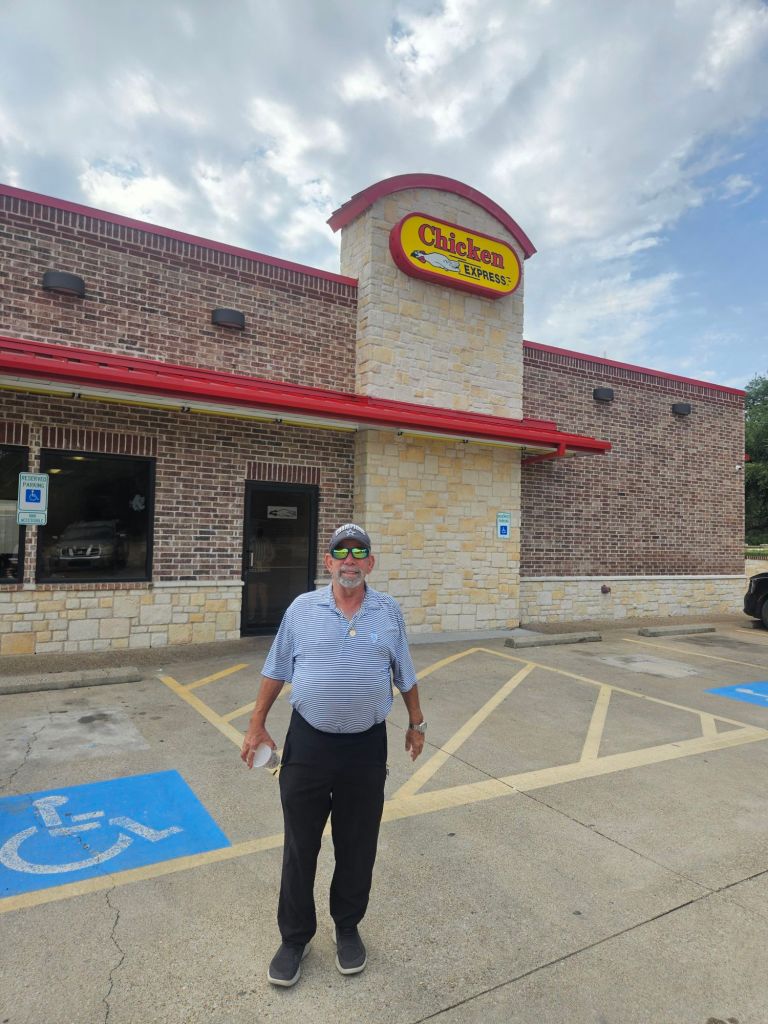
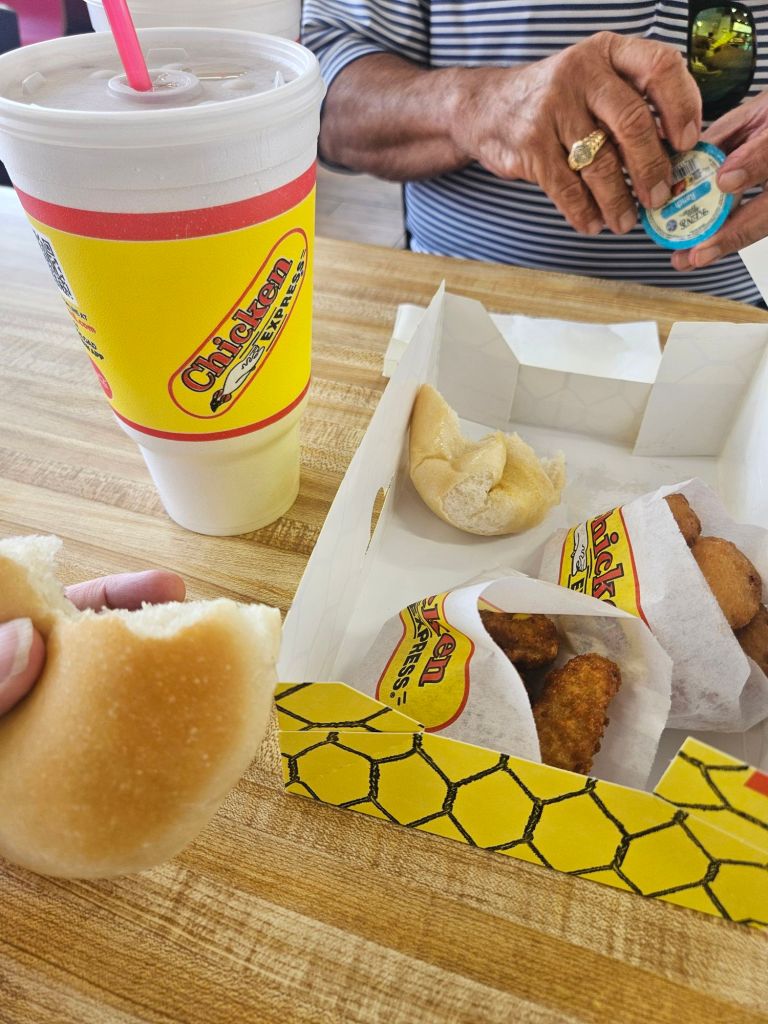
Rolls, sweet tea, jalapeños poppers and corn nuggets make a good snack from Chicken Express.

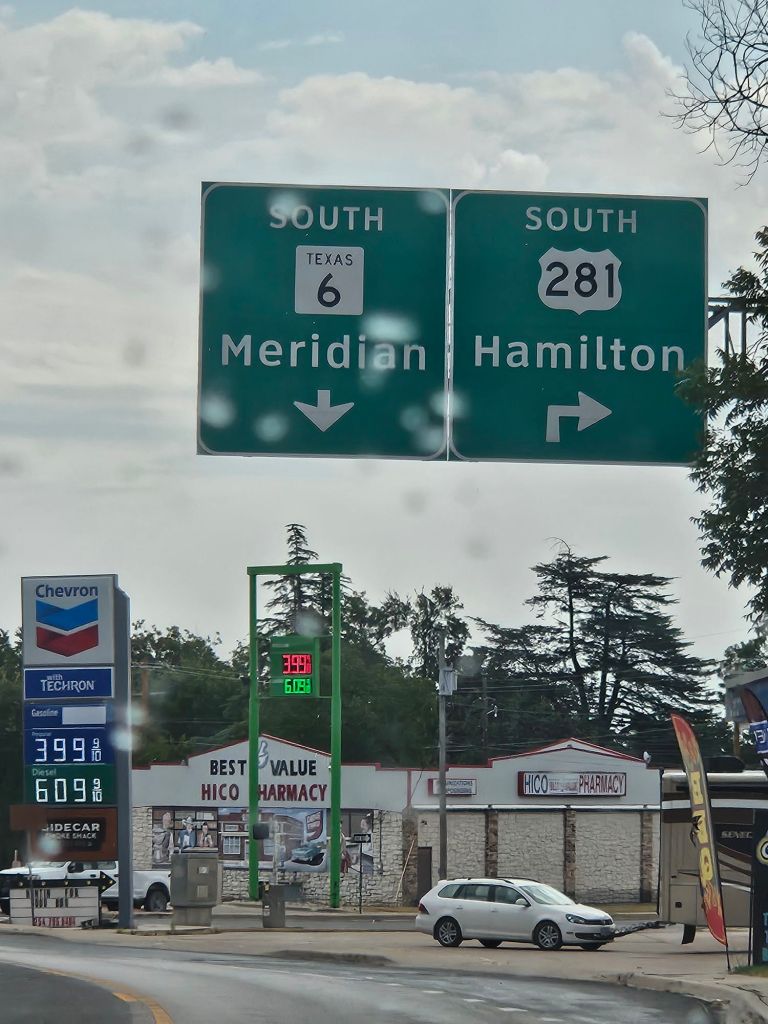
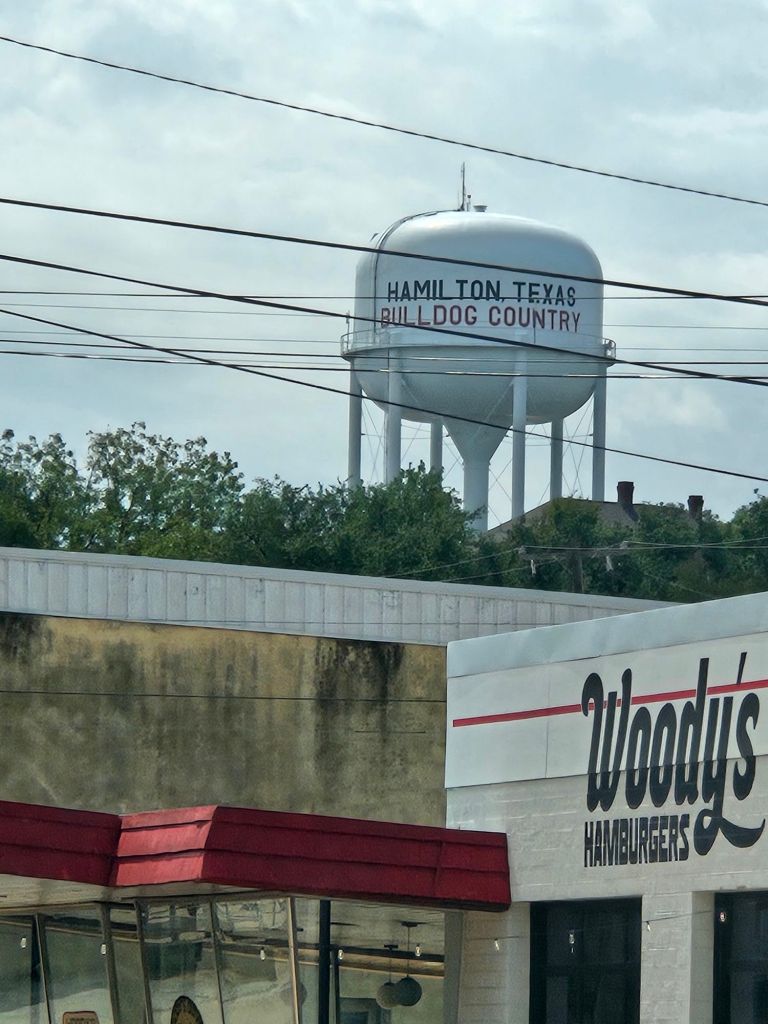
Hamilton. Texas
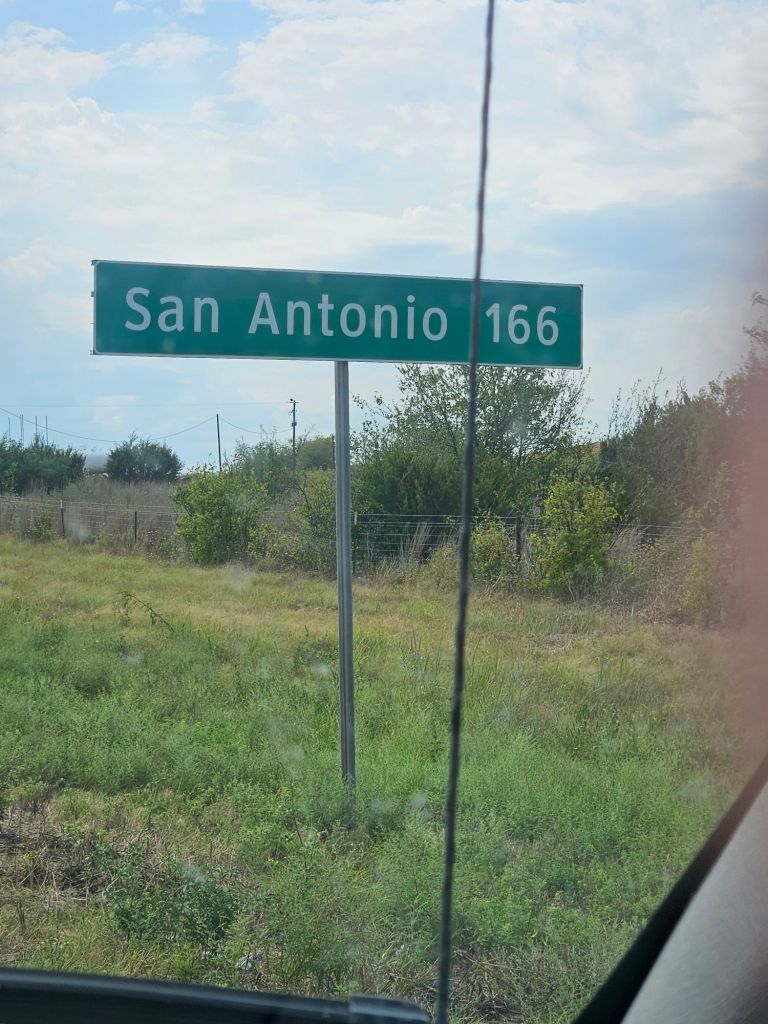
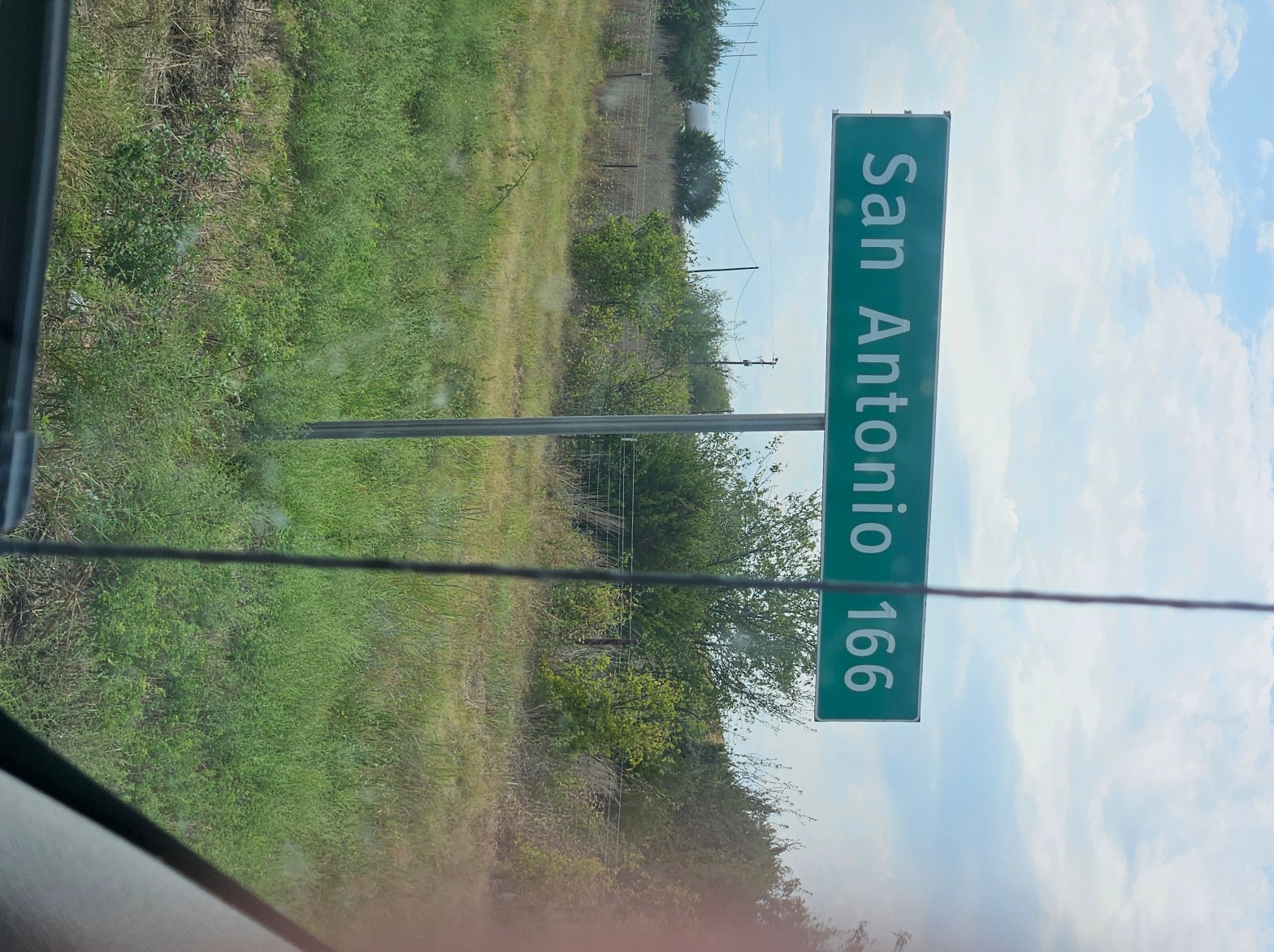
166 miles to go
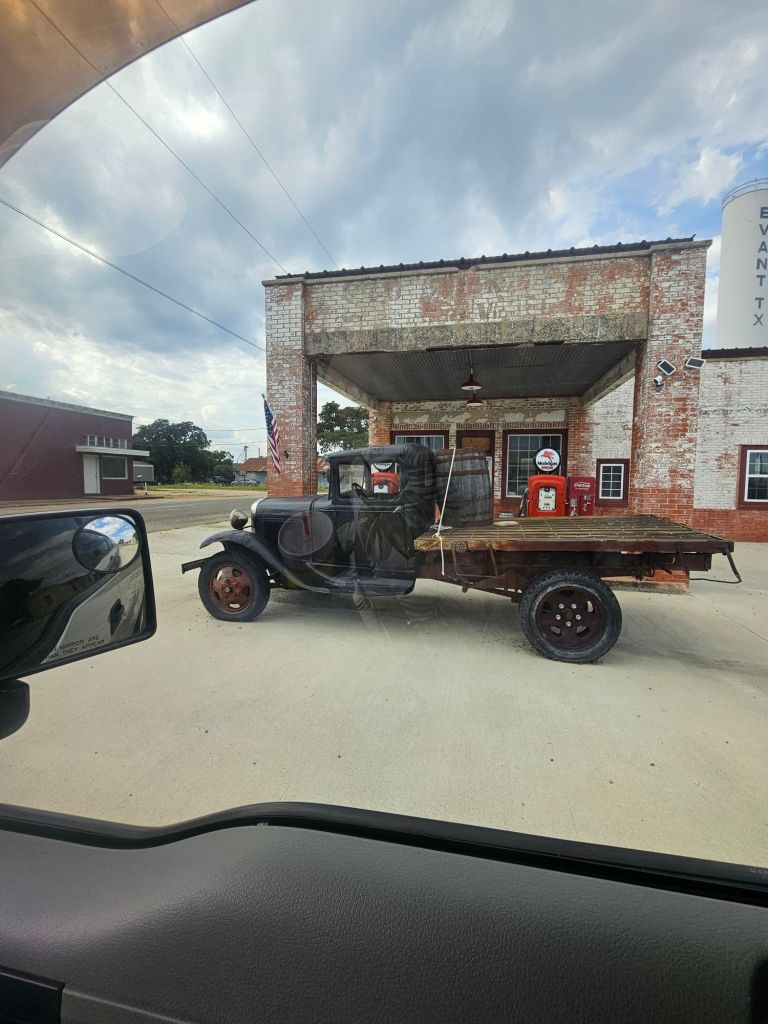
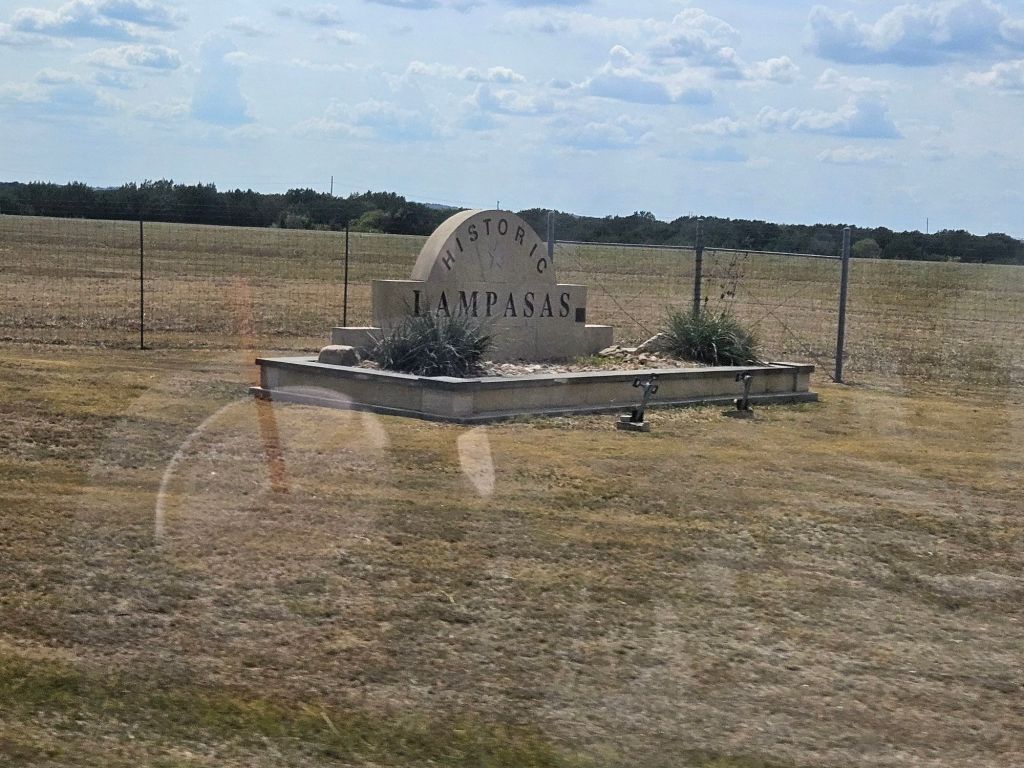
Lampasas Tx

We made it through Johnson City then to San Antonio. We were exhausted and had to sleep.

The Best-Laid Plans

Well, friends, vaca has begun — just not the way I drew it up.

The plan was a good one. Pete and I were going to roll into San Antonio on Sunday afternoon, find the bleachers, and watch our grandson play ball. I had it all pictured: me hollering like I used to , Pap keeping score in his head whether anybody asked him to or not.

Then we got here.

Somewhere between Boyd and San Antonio, the years caught up with us. By the time we pulled off the highway, we were both worn slap out. The bleachers were going to have to wait. What we needed — urgently, desperately — was food and a bed, in that order.

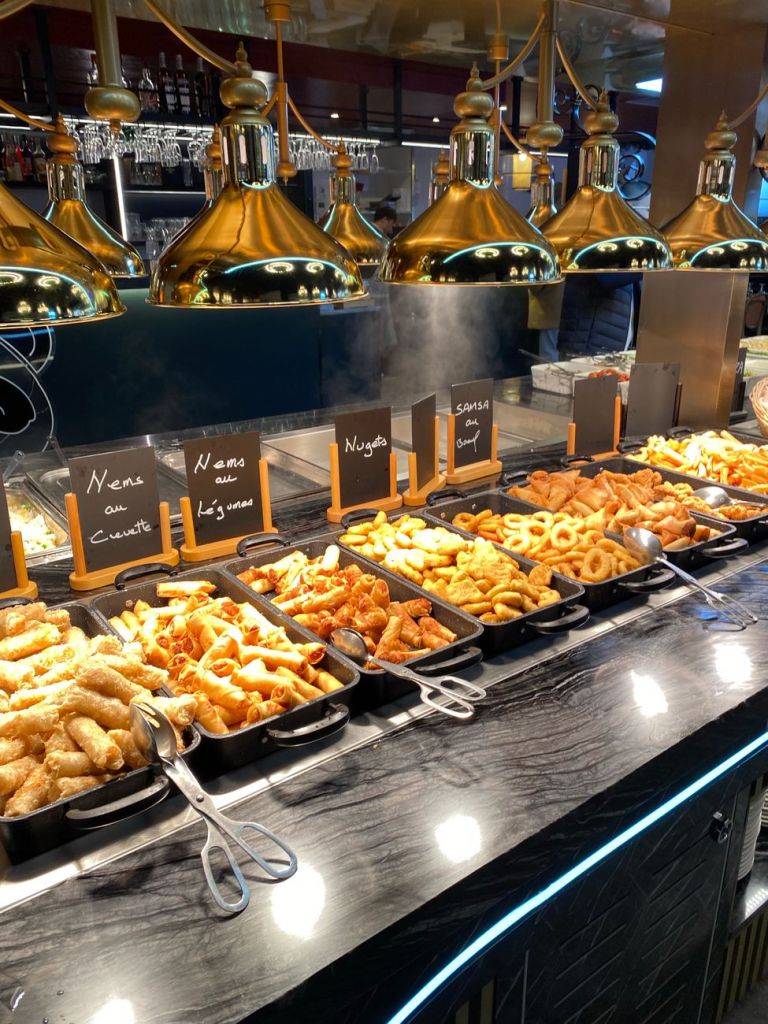
So we did what any sensible pair of tired travelers would do: we found a Chinese buffet and ate like we were making up for lost time. Egg rolls, lo mein, something sweet and sticky I couldn’t name but would absolutely order again. Nobody cheered, nobody kept score, and it was perfect.

Then we found ourselves a room at the Drury, and let me tell you, that bed might as well have been a cloud with a checkout time. We were out before the news came on.

Here’s what I’m learning, and maybe you already know it: the trip doesn’t have to match the picture in your head to be a good one. Bloom where you are planted — and Sunday evening, I was planted in a booth with a plate of lo mein, and later in a hotel bed the size of Texas. No complaints.

We’ve got the whole week ahead of us. Port Aransas is waiting, the beach is waiting, and Wednesday is Papi’s birthday, so the celebrating is just getting started. The ball games will still be there. The grandson knows his Dinky loves him whether I’m in the bleachers or facedown in a pillow by eight o’clock.

More from the road soon. — Dinky

The Day the Sun Went Out Over Lampasas

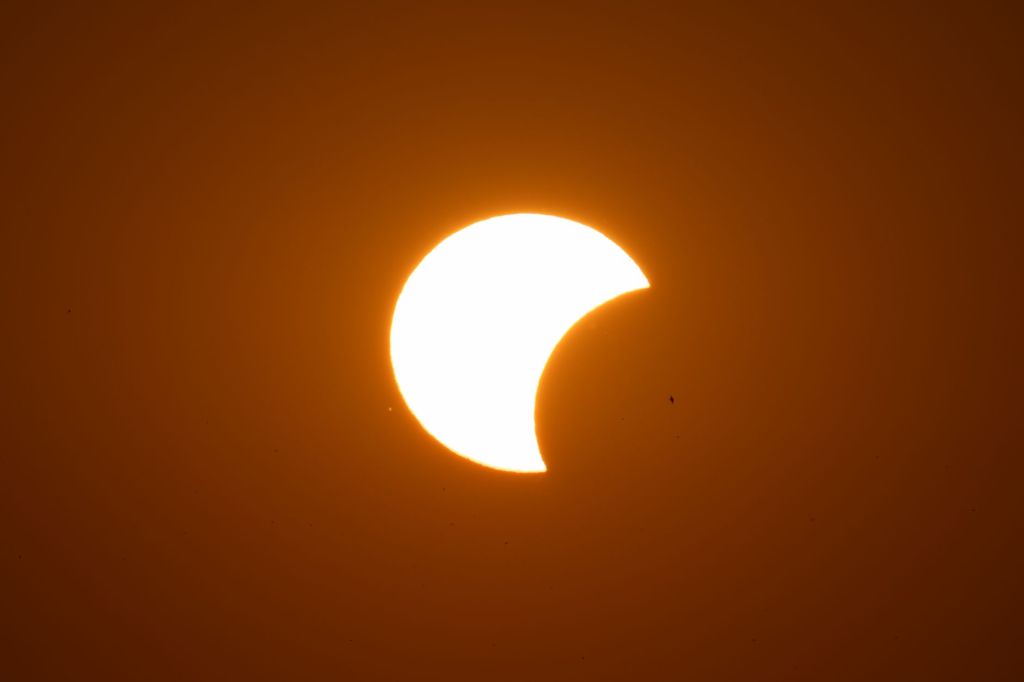
There are some days a town remembers by the weather, some by who got married or whose calf got loose, and a precious few by what happened in the sky. Monday, April 8, 2024, was one of those rare days in Lampasas, Texas. Right in the middle of an ordinary afternoon, the Moon moved in front of the Sun and daylight slipped away.

Lampasas sat close to the center of the eclipse’s path of totality, so this little Hill Country town had a front-row seat. The partial eclipse began shortly after noon, and by about 1:35 in the afternoon the Sun was completely covered. Astronomy magazine calculated 4 minutes and 24 seconds of totality for Lampasas. On its list of 20 recommended viewing places, Lampasas was the sixth stop overall and the third Texas location named. That is mighty fine company for a town most folks usually pass through on the way to somewhere else.

The change did not happen all at once. The light thinned and took on a strange, muted color. Then the temperature dropped. Day turned to twilight, and the bright ring of the Sun’s corona showed around the black circle of the Moon whenever the passing clouds allowed. Across eclipse country, birds quieted and bright planets and stars became visible in the daytime sky. Imagine looking up after lunch and seeing the heavens behaving like midnight had come early.

Folks gathered in Lampasas parks and open spaces, wearing their eclipse glasses and watching the clouds as closely as the clock. Local reports said two city parks filled up, and the town had prepared carefully for the visitors. For those few minutes, people who had come from near and far all stood under the same shadow. Some cheered. Some went quiet. I expect more than a few simply stared, because there are moments too big for talking.

Lampasas does have a way of finding itself in the middle of unusual history. Back in 1952, more than 100,000 military personnel came through Central Texas for Operation Longhorn, a massive war game in which mock enemy forces occupied Lampasas before United States troops took it back. Decades later, another great event rolled through—only this time the visitor was the Moon’s shadow, and the whole town welcomed it.

And because this is Texas, Lampasas also has a roadside landmark big enough to match the story: the World’s Largest Spur. The Guinness-recognized metal sculpture stands about 34 feet tall. It seems fitting that a place with a giant spur would also get a Texas-sized view of the sky.

The next total solar eclipse visible anywhere in the contiguous United States arrives in 2044, but its path of totality will stay far north of Texas. A small part of the Texas Panhandle is due to return to totality in 2045. For Lampasas, the wait will be much longer. That makes those four minutes and 24 seconds feel even more precious.

What stays with me most is not only that the Sun disappeared. It is that a whole town stopped what it was doing and looked up together. For one little stretch of an April afternoon, everybody stood beneath the same darkened sky and remembered how small we are—and how beautiful this old world can be.

Where were you when the Sun went out on April 8, 2024? Tell me what the light, the quiet, and that sudden darkness felt like where you stood.

Sources

• Astronomy magazine: “20 of the best places to view the 2024 total solar eclipse” [link]

• City of Lampasas eclipse planning information [link]

• KWTX: Central Texans after eclipse totality [link]

• Eclipse photograph source page [link]

• City of Lampasas: World’s Largest Spur [link]

• Operation Longhorn historical-marker text [link]

The Time the Army Invaded Lampasas, Texas

By Dinky

If you think of Lampasas as a quiet little Hill Country town, picture it in the spring of 1952 with tanks rolling through, soldiers posted around town, and parachutes opening across the countryside. It looked like an invasion, and that was exactly what the United States Army wanted it to look like.

The event was called Operation Longhorn. It was not a true military lockdown, and no foreign army had taken Texas. It was a giant war game—described as the largest one America had staged up to that time—with more than 100,000 troops taking part in the broader exercise. Lampasas County became the battlefield for a make-believe invasion, but there was nothing small about the size of it.

For the exercise, the Army created a fictional enemy nation called Aggressor. This imaginary country had its own flag, its own made-up history, and soldiers assigned to play the enemy. The Aggressor idea had been developed after World War II to make training feel more like the confusion and pressure of real combat. In 1952, it also fit the fears of the day. The Cold War was heating up, the Korean War was still raging, and Americans were being warned about the spread of Communism.

Lampasas was cast as a Texas town under enemy occupation—and American troops had to take it back.

In the story being acted out, Aggressor forces had invaded and occupied Texas. Lampasas was cast as the town under enemy control, and American troops had to take it back. That meant the people who lived there found their familiar streets and pastures turned into a military training ground.

Then came April 8, 1952. The entire 82nd Airborne Division parachuted into Lampasas County. Just stop and picture that sky for a minute—aircraft overhead and one parachute after another floating down over Central Texas. The Army’s own division history records Exercise Long Horn and even notes the division’s first heavy drop, including a jeep sent down by parachute.

From the Army’s point of view, the purpose was serious. Troops needed practice moving in large numbers, gathering intelligence, handling an enemy occupation, and fighting to recover American ground. A fictional country gave the soldiers a clear opponent, and a real Texas town gave the exercise roads, buildings, fields, fences, and civilians—things a training map could never fully provide.

From the front porch, though, it must have been something else entirely. Tanks and military vehicles moved through the area. Soldiers seemed to be everywhere. Lampasas was treated as occupied territory for the drill. Everybody knew it was an exercise, but the Army meant for it to feel real enough that the troops would learn from it. One surviving Army newsreel summed it up plainly: it was frighteningly real, but it was all a drill.

That is the part of local history I love—the big national story landing right in ordinary people’s fields. Operation Longhorn belongs to the Cold War and the Korean War era, but it also belongs to Lampasas families who watched it unfold outside their homes. The Lampasas County Museum has helped preserve material about the exercise, and old film footage lets us see a little of what the town saw in 1952.

For readers who want to dig deeper: the 82nd Airborne Division’s period unit history, a Lampasas local-history feature made with thanks to the Lampasas County Museum, the Operation Longhorn Army newsreel, and the Army documentary The Aggressor.

Can you imagine looking out your kitchen window and seeing the 82nd Airborne landing in your pasture? If you remember Operation Longhorn—or heard stories about it from your parents or grandparents—I would love for you to share them.

DINKY ON THE FARM | Bloom where you are planted

Did Billy the Kid Die in Hico, Texas?

A Texas tale where history and legend meet

Official history says the Kid died in New Mexico. Hico has never been so sure.

There are some stories that settle down and behave themselves in the history books, and then there are stories that keep one boot in the door. Billy the Kid’s is one of those. Most folks have heard how his story ended in New Mexico, but down here in Texas, the little town of Hico has held on to another ending for a very long time.

The well-known tintype of Billy the Kid, also called William H. Bonney. Image source: New Mexico Tourism Department.

The official version is plain enough. Billy the Kid, also known as William H. Bonney, was shot and killed by Sheriff Pat Garrett at Fort Sumner, New Mexico, on July 14, 1881. Billy was only about twenty-one years old. His body was identified, he was buried, and that was supposed to be the end of it.

But legends do not always stay buried.

In 1948, a man named William Morrison was working on a land claim for an elderly fellow called Joe Hines. While Morrison was trying to sort out the claim, Hines told him something mighty strange: he said he was really Jesse Evans, an outlaw who had ridden during the days of the Lincoln County War. Then Hines went one step farther. He said Billy the Kid had not died in 1881 at all. According to him, Billy was still alive and living near Hico under the name Ollie “Brushy Bill” Roberts.

That claim led Morrison to Brushy Bill, an old cowboy with a weathered face and quite a story to tell. Brushy said that on the night Pat Garrett supposedly killed Billy the Kid, Garrett had actually shot another outlaw named Billy Barlow. The dead man was passed off as the Kid, Brushy said, while the real Billy slipped away and eventually disappeared into Mexico.

Ollie “Brushy Bill” Roberts, the Hico-area man who said he was Billy the Kid. Image source: All That’s Interesting.

Now, Brushy Bill did not come to the table empty-handed. Morrison said the old man carried twenty-six bullet and knife scars. Several people who had known Billy the Kid signed affidavits saying they believed Brushy Bill was the same man. That does not make the claim proven, but it was enough to keep Morrison digging—and enough to keep the story alive.

Brushy Bill said he was not looking for fame. What he wanted was the pardon he believed New Mexico Governor Lew Wallace had promised Billy the Kid back in 1879. Morrison took up his cause, and on November 29, 1950, he got Brushy Bill a hearing with New Mexico Governor Thomas Mabry.

The hearing went badly. Brushy Bill was old, sick, nervous, and surrounded by reporters and skeptics. Governor Mabry refused to grant the pardon and said he did not believe the man standing before him was Billy the Kid. Brushy went home to Hico without the one thing he had come for.

Four weeks later, on December 27, 1950, Brushy Bill collapsed while walking to the post office in Hico and died. Folks around town said he died of disappointment. I do not know whether a broken heart can be entered on a death certificate, but I surely understand what they meant.

The skeptics have good reasons for doubting him. One argument repeated over the years is that Brushy Bill could not read or write, while Billy the Kid could. Even that point is disputed, because other accounts say Roberts kept notes in composition books. The harder piece of evidence is the Roberts family Bible, which reportedly gives his birth year as 1879. If that date is right, he would have been only two years old when Billy the Kid was supposedly killed. That is a mighty big hole in the story.

Still, Hico has never let the tale fade away. The Billy the Kid Museum sits right on the main strip in town, keeping Brushy Bill’s claim on display for anybody curious enough to stop. His grave is down in Hamilton, about twenty miles south, under a granite arch carved with the words “Billy the Kid.” History may have made up its mind, but Texas left room for a little doubt.

And I will admit I am a tiny bit partial to Brushy Bill’s side for one personal reason: he died on December 27, and that happens to be my birthday. That does not prove a blessed thing, of course, but it makes me feel like I ought to give the old fellow a fair hearing.

So what do you think? Did Pat Garrett really kill Billy the Kid in Fort Sumner in 1881, or did the Kid live long enough to become an old cowboy in Hico, Texas? Leave me a comment and tell me which side you believe.

— • —

For further reading: History.com · True West Magazine · City of Hamilton gravesite page
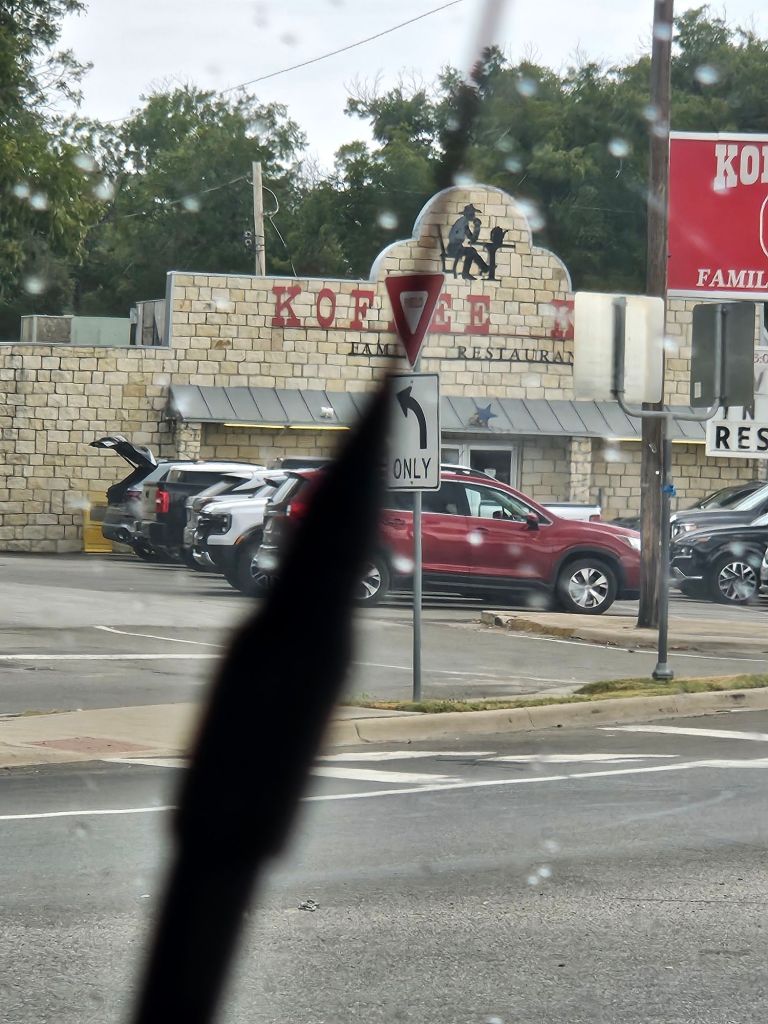
The Koffee Kup Kafe

Hico’s Café with Two Histories

Some places serve up more than a plate lunch. They serve a whole town’s story. The Koffee Kup in Hico is one of those places, and its story has two sides: one warm and familiar, and one hard enough that we ought not look away.

The café opened in 1968 at the crossroads of Highways 6 and 281. For generations of locals and travelers, it has been the kind of Texas stopping place where the coffee keeps coming and supper tastes like somebody’s grandmother still runs the kitchen. Folks know it for chicken-fried steak, crisp onion rings, plenty of cream gravy, and a pie case that can make a sensible person forget all about being sensible.

When The Daytripper featured Hico, the Koffee Kup was presented as a classic small-town café. The show praised the golden-brown chicken-fried steak, onion rings, and gravy, then pointed folks toward sixteen kinds of homemade pie. That is the beloved half of the story, and it is real. This restaurant has fed a heap of people and given many families a favorite place to meet on the road.

But there is another half, and I do not believe in hiding the bitter just because the sweet is easier to swallow.

Through the later years of the twentieth century, the old Koffee Kup Kafe was known locally as a meeting place for members of the Ku Klux Klan. Historical accounts say the Waco Knights held monthly meetings there for close to three decades, ending around 1990. The old spelling—Koffee Kup Kafe—left three K’s in plain sight, and many people read that as a deliberate wink toward the Klan rather than an innocent bit of café spelling.

Those were not harmless initials. The Ku Klux Klan built its name on white supremacy, intimidation, and violence. Later accounts describe rallies and cross-burnings in or around the café’s parking area. A June 30, 1990 Fort Worth Star-Telegram report shows Hico residents pushing back on an announced Klan rally: no local store volunteered window space for a handbill, a waitress at the Koffee Kup said, “We don’t want it,” and the planned cross-burning had to be moved to a field outside town because of fire ordinances.

By 2012, the business was being called the Koffee Kup Family Restaurant. A later historical account—drawing on reporting from the Odessa American—described the name change alongside Hico’s effort to change its image. Today the restaurant is still a popular stop, better known for family meals, towering meringue, and that famous chicken-fried steak than for the ugliness tied to its earlier years.

I think both truths belong on the same page. The good meals and family memories are real. So is the history that made some people feel unwelcome or unsafe. Telling one side without the other would leave us with a prettier story, but not an honest one.

To me, reckoning with the past is not the same as pretending it never happened. It means naming what was wrong, listening to the people it hurt, and choosing what kind of place you want to be now. A new name by itself cannot erase old harm, but it can be part of a larger decision to turn away from it.

Towns are a little like people that way. They can carry scars, make mistakes, face hard truths, and still choose to do better. Hico’s Koffee Kup has two histories—the home-cooking landmark and the shadow behind the old name. I believe readers deserve to know them both. And if the story is still being rewritten with a wider welcome and a better heart, then that second chance is worth writing about, too.

—Dinky